

Global climate change is the long-term shift in Earth’s average temperatures and weather patterns, driven mainly by human activity since the Industrial Revolution. Burning coal, oil, and natural gas releases carbon dioxide and other greenhouse gases that trap heat in the atmosphere. Global average surface temperature has already risen by roughly 1.1 to 1.2 degrees Celsius above pre-industrial levels, and the consequences show up in melting ice, rising seas, shifting rainfall, and more intense heat waves.
Understanding this topic matters because energy sits at the center of it. Most of the world’s greenhouse gas emissions come from producing and using energy, which ties climate change directly to the broader global sustainability challenge of meeting rising demand without destabilizing the systems that support human life.
This article explains the greenhouse effect in plain language, identifies the major sources of emissions, and looks at the observed effects across regions. It then examines the main categories of response, from efficiency and policy to renewable technologies such as photovoltaics. The aim is a clear, balanced picture that helps you take part in informed discussions about where energy and climate go from here.
What Global Climate Change Means
Global climate change refers to long-term shifts in Earth’s average temperatures and weather patterns, measured over decades rather than days. The distinction matters. Weather is what you see out the window today: a thunderstorm, a cold snap, a sunny afternoon. Climate is the pattern those conditions form across 30 years or more. One unusually cold winter doesn’t cancel a warming trend, just as one hot summer doesn’t prove it.
The planet’s climate has always changed. Orbital cycles, volcanic eruptions, and shifts in solar output have driven ice ages and warm periods over hundreds of thousands of years. That natural variability is real, and scientists account for it carefully. What sets the current period apart is the cause and the pace. Assessments such as those from the IPCC conclude that human activity, mainly the burning of fossil fuels, has been the dominant driver of warming since the mid-twentieth century. Past natural transitions typically unfolded over thousands of years, while today’s rate of change is far faster.
Some core terms help here:
- Climate
- The typical weather conditions of a region averaged over many years, usually 30 or more.
- Weather
- The short-term state of the atmosphere, such as temperature, rain, or wind on a given day.
- Greenhouse gas
- A gas, such as carbon dioxide or methane, that traps heat in the atmosphere.
- Global warming
- The long-term rise in Earth’s average surface temperature.
- Climate change
- The broader set of shifts that accompany warming, including altered rainfall, sea level, and extreme weather.
The last two terms are often used interchangeably, but they aren’t identical. Global warming describes the temperature rise itself. Climate change covers everything that rise sets in motion, which is why scientists tend to prefer it as the wider label.
How Climate Change Works: The Physics Behind a Warming Planet
The Energy Balance of Earth
Sunlight is the engine behind Earth’s climate. Averaged over the whole planet, about 30 percent of the incoming solar radiation is reflected straight back to space by clouds, bright surfaces such as ice and snow, and the atmosphere itself. The remaining 70 percent is absorbed by the land, oceans, and air, which warms them.
A warm planet can’t simply keep collecting energy, so it also gives energy back. Earth sheds heat by emitting infrared radiation, a form of light we feel as warmth but can’t see. The hotter a surface gets, the more infrared it emits.
That relationship is what keeps temperatures stable. When absorbed sunlight and outgoing infrared are equal, the planet’s average temperature holds steady. If the two fall out of balance, even slightly, Earth gradually warms or cools until a new balance is reached. Global temperature, in other words, is set by where that balance lands.
Greenhouse Gases, Feedbacks, and the Role of Oceans
Greenhouse gases work because of their molecular structure. Nitrogen and oxygen, which make up most of the atmosphere, let infrared radiation pass straight through. Carbon dioxide, methane, and nitrous oxide are different. Their molecules vibrate in ways that absorb outgoing infrared energy and re-emit it in all directions, including back toward the surface. Carbon dioxide is the most important driver because of its sheer volume and its persistence, lingering for centuries. Methane traps far more heat per molecule but breaks down within roughly a decade. Nitrous oxide sits in between, lasting well over a hundred years.
Feedback loops determine whether an initial push toward warming grows or shrinks. Water vapor is a clear amplifier: a warmer atmosphere holds more of it, and water vapor is itself a greenhouse gas. Melting snow and ice work similarly. Bright surfaces that once reflected sunlight give way to darker land or open water, which absorbs more heat. Some feedbacks may dampen change, such as certain cloud effects, though scientists still study how clouds net out. Overall, assessments conclude that amplifying feedbacks outweigh dampening ones.
Oceans act as the planet’s great buffer. They have absorbed the vast majority of the excess heat trapped by added greenhouse gases, which slows the pace of warming at the surface but leads to sea level rise as water expands. Oceans also take up roughly a quarter of the carbon dioxide humans emit. This helps limit atmospheric concentrations, yet the dissolved carbon forms carbonic acid, lowering seawater pH, a process called ocean acidification. Warmer water also holds less dissolved gas, so the ocean’s ability to absorb carbon may weaken over time.
The Main Sources of Greenhouse Gas Emissions
Greenhouse gases reach the atmosphere from many places, but one pattern stands out: most emissions trace back to how the world produces and uses energy. Burning coal, oil, and natural gas releases carbon dioxide that had been locked underground for millions of years. That is why the energy system sits at the center of both the problem and the solutions.
Here are the major contributors, from largest to more modest in typical assessments:
- Energy supply (electricity and heat): Power plants burning coal, gas, or oil release carbon dioxide as fuel is converted into usable energy.
- Transport: Cars, trucks, ships, and aircraft emit carbon dioxide from burning petroleum-based fuels.
- Industry: Steel, cement, and chemical production emit gases from fuel use and from the chemical reactions themselves.
- Buildings: Heating, cooling, and cooking with fossil fuels release gases on site, and electricity use adds indirect emissions.
- Agriculture: Livestock digestion and rice paddies produce methane, while fertilizers release nitrous oxide.
- Land use change: Clearing forests releases stored carbon and removes trees that would otherwise absorb carbon dioxide.
Notice that the first four entries are all, in some way, about energy. Agriculture and land use matter a great deal too, but they work differently. Their emissions involve methane and nitrous oxide, gases that trap more heat per molecule than carbon dioxide, even though they are present in smaller quantities and break down faster.
Exact shares depend on who is counting and how. Some analyses assign emissions from electricity to the buildings and factories that use it, while others credit them to the power plant. Figures also shift from year to year as economies grow, fuel mixes change, and measurement methods improve. For up-to-date numbers, it is best to consult current publications from bodies such as the Intergovernmental Panel on Climate Change (IPCC) and the International Energy Agency (IEA).
What stays consistent is the broad picture: reducing emissions means rethinking how energy is generated, moved, and consumed. That is where technologies like photovoltaics come in, supplying electricity without combustion. We will return to those solutions after looking at what a warming climate is already doing around the world.
Observed Impacts Across Environments and Societies
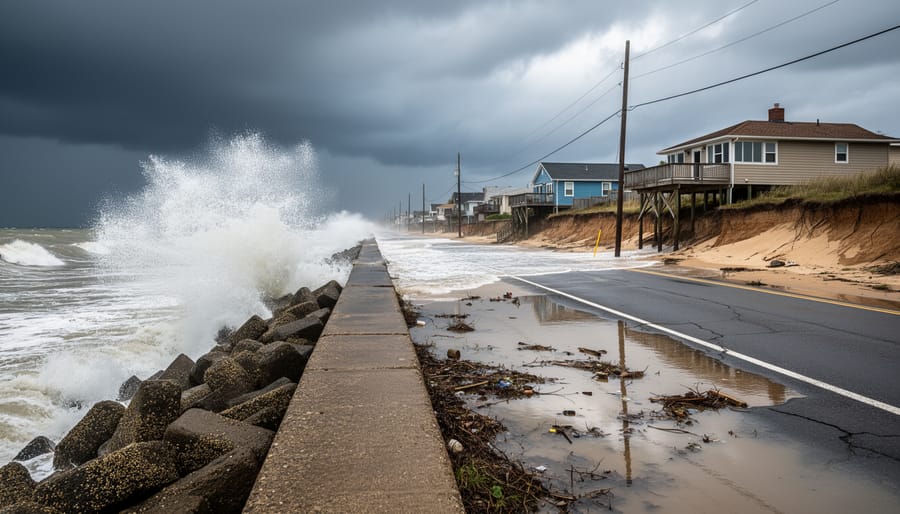
Scientific assessments, including those from the IPCC, document a range of changes that are already measurable. Global average surface temperature has risen by roughly 1.1°C above pre-industrial levels, and the past decade includes the warmest years on record. These shifts do not land evenly, though. Land areas and the Arctic have warmed faster than the global average, while other regions have seen more modest increases.
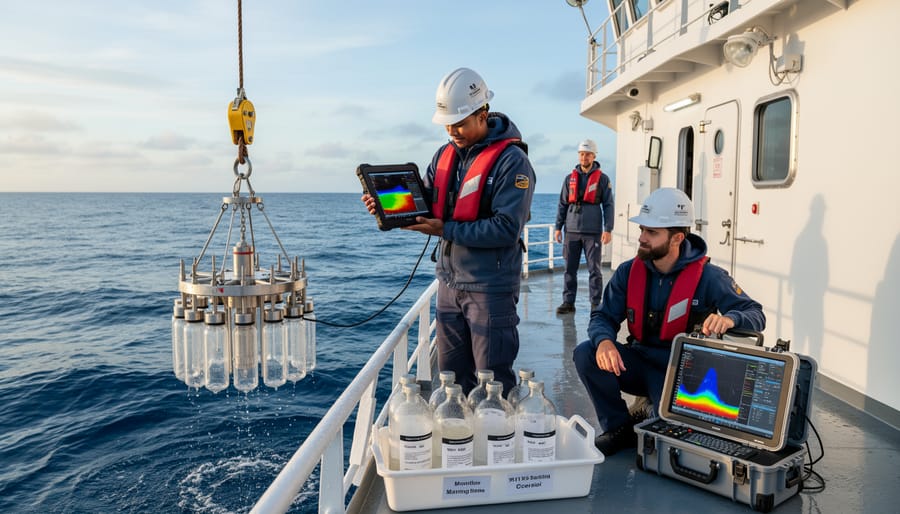
Water is changing in several ways at once. Sea levels are rising as ocean water expands when it warms and as glaciers and ice sheets lose mass, which raises flood and erosion risks for coastal communities and low-lying island nations. Precipitation patterns are also shifting. Some regions are getting heavier rainfall and flooding, while others face longer, more frequent droughts. The oceans have absorbed most of the excess heat trapped by greenhouse gases, and they take up a large share of emitted carbon dioxide too. That uptake makes seawater more acidic, which affects shell-forming organisms such as corals and some plankton.
Extreme events are another documented trend. Heatwaves have become more frequent and intense in many regions, and attribution studies increasingly link specific heat events and heavy rainfall episodes to a warming climate. Researchers are careful to note that the strength of these links differs by event type and location.
These physical changes translate into pressures on human and natural systems. Ecosystems are shifting their ranges and seasonal timing, crop yields can suffer under heat and water stress, freshwater supplies are strained in drought-prone areas, and infrastructure built for past conditions may struggle with new extremes. Some of these pressures overlap with other challenges, such as the links between energy and air pollution which affect public health alongside the changing climate. The degree of impact depends heavily on local geography, resources, and how well communities are able to prepare.
How Societies Respond: Mitigation, Adaptation, and Clean Energy Solutions
Reducing Emissions With Renewable and Low-Carbon Energy
Cutting emissions from electricity and heat means shifting toward sources that release little or no carbon dioxide while running. The main options each carry distinct strengths and trade-offs, and most energy plans combine several of them.
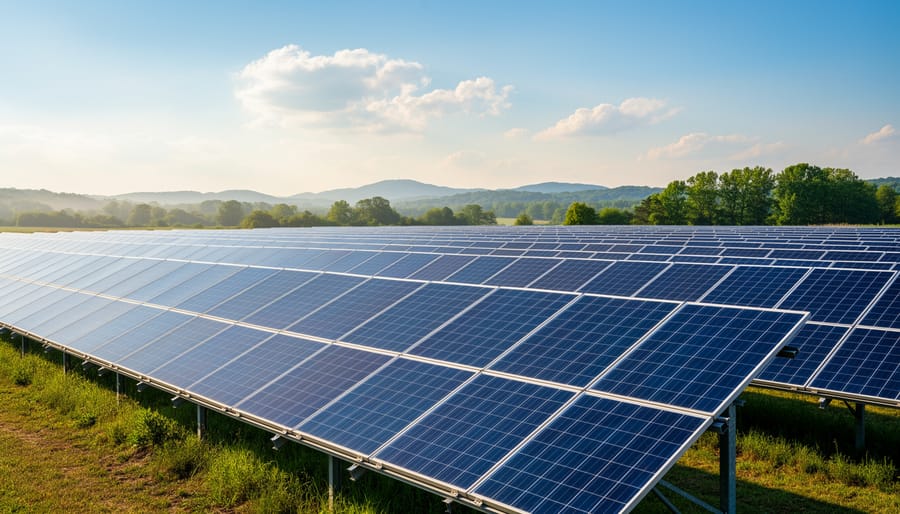
Solar photovoltaics rely on the photovoltaic effect. When sunlight strikes a semiconductor material, usually silicon, its energy knocks electrons loose and a built-in electric field pushes them in one direction, producing direct current. Individual photovoltaic cells are wired into panels, and an inverter converts their output to the alternating current that homes and grids use. A complete solar power system can range from a few rooftop panels on a house to a utility-scale solar farm covering hundreds of hectares. Solar’s costs have fallen sharply, and it scales easily, though output varies with weather and time of day.
Other low-carbon options fill different roles:
– Wind: Strong output in windy regions, but generation is variable.
– Hydropower: Reliable and storable, yet dependent on suitable rivers and sometimes disruptive to ecosystems.
– Geothermal: Steady around-the-clock power, limited to areas with accessible heat.
– Nuclear: High-capacity, low-carbon baseload power, with high upfront costs and long construction times.
– Bioenergy: Can use waste and residues, but sustainability depends on how feedstocks are sourced.
Because wind and solar vary, batteries, grid upgrades, and flexible demand help balance supply. No single technology works everywhere, so regions typically match their mix to local resources, costs, and needs.
Adapting to Changes Already Underway
Even if emissions fell sharply tomorrow, the climate would keep changing for decades, because heat already stored in the oceans and gases already in the atmosphere don’t disappear overnight. That is why adaptation matters: it focuses on reducing harm from effects that are now unavoidable.
Adaptation looks different from place to place. Coastal cities build sea walls, restore mangroves and wetlands, and raise buildings or roads that face repeated flooding. Dry regions invest in water management, such as drip irrigation, rainwater harvesting, wastewater reuse, and reservoirs designed to handle longer droughts. In cities, urban planning can lower heat risks through shade trees, reflective roofing, green space, and building codes suited to hotter summers.
Early warning systems may be among the most cost-effective tools. Forecasts, alert networks, and evacuation plans for floods, cyclones, and heatwaves have helped many communities prevent loss of life. Farmers also adapt by shifting planting dates, choosing drought-tolerant crops, and using seasonal forecasts.
Adaptation doesn’t replace mitigation. The two work together. Cutting emissions limits how severe future changes become, while adaptation prepares societies for the changes already locked in. The more warming is avoided, the easier and cheaper adaptation tends to be, and the more options communities keep available.
Common Questions About Global Climate Change
Questions about climate change tend to repeat, and the clearest answers stay close to what the evidence supports. Here are some of the most common ones, answered briefly.
What is the difference between climate and weather?
Weather describes conditions over a short span, such as today’s rain or this week’s heatwave. Climate is the average of those conditions over decades, so one cold winter doesn’t cancel a long-term warming trend.
How do scientists know humans are the main cause of recent warming?
Several lines of evidence point the same way: rising carbon dioxide levels, chemical fingerprints showing the added carbon comes from fossil fuels, and temperature patterns that natural cycles alone can’t explain. Major scientific assessments, including those from the IPCC, conclude that human activity is the dominant driver.
Is climate change the same as the ozone hole?
No. The ozone hole involved ozone-depleting chemicals thinning a protective layer high in the atmosphere, which lets in more ultraviolet light. Climate change comes from heat-trapping gases building up lower down, though a few of the same chemicals affect both.
How does solar energy help reduce emissions?
Photovoltaic panels turn sunlight directly into electricity without burning fuel, so they can displace fossil-fuel generation on the grid. Like any large project, they have local effects worth weighing, and the research on the solar farms impact offers a balanced look at them.
What can individuals and communities realistically do? Most of the largest gains come from shared decisions about energy, transport, and buildings. At home, that can mean improving insulation, choosing efficient appliances, or installing rooftop solar where it makes sense. In communities, it often means supporting cleaner local power, better public transit, and planning that prepares for heat, flooding, or drought. No single action solves the problem, but many modest choices, made across regions with different needs, add up over time.
Global climate change comes down to physics. Earth takes in sunlight and sends heat back out, and extra greenhouse gases from human activity keep more of that heat near the surface. Because most of those gases come from how the world generates and uses energy, the energy system sits at the center of both the problem and the solutions.
No single technology closes that gap. Photovoltaics turn sunlight directly into electricity and keep getting cheaper, but they work best alongside wind, hydropower, geothermal, nuclear, storage, and efficiency gains. The right mix will differ from place to place, shaped by local resources, infrastructure, and economic needs. Adaptation matters too, since some changes are already underway.
If this topic has left you curious, keep going. Check current assessments from the IPCC and IEA, compare how different regions approach the same challenge, and talk it through with classmates, colleagues, or friends. Informed, open discussion is one of the most useful tools we have for building a sustainable energy future.