

Global energy solutions groups are collaborative coalitions of governments, international organizations, corporations, and research institutions that coordinate policy, technology, and financing strategies to accelerate the worldwide transition to clean energy systems. These alliances function as strategic platforms where member nations and organizations share technical expertise, pool financial resources, and establish unified frameworks for deploying renewable technologies like solar photovoltaics, wind power, and energy storage at scale across diverse economic contexts.
The concept emerged from a recognition that no single nation or entity possesses the capital, innovation capacity, or political reach to transform global energy infrastructure alone. A sustainable energy future requires coordinated action across borders, particularly as developing economies represent the fastest-growing segment of energy demand while often lacking access to affordable clean technologies.
These groups operate through distinct but complementary mechanisms. Some focus on technology transfer, helping emerging markets adopt proven photovoltaic systems and grid integration solutions. Others prioritize policy harmonization, creating standardized regulations that reduce market friction and attract private investment. Financial mechanisms represent another critical function, with multilateral development banks and green investment funds channeling capital toward infrastructure projects that individual nations would struggle to finance independently.
What distinguishes effective global energy solutions groups from symbolic international gatherings is their ability to translate ambitious commitments into measurable deployment outcomes. The most impactful coalitions establish clear benchmarks for renewable capacity additions, track progress through transparent reporting systems, and hold members accountable for meeting targets. They also adapt their strategies based on technological advances, cost reductions in solar and battery storage, and shifting geopolitical realities that influence energy security priorities.
Understanding how these groups function provides essential context for evaluating whether international energy cooperation can deliver results at the pace climate science demands.
The Role of Global Energy Solutions Groups in Addressing Energy Challenges
Coordinating Cross-Border Renewable Energy Initiatives
Cross-border renewable energy projects require coordination across legal systems, grid operators, and regulatory frameworks that rarely align naturally. Global energy solutions groups serve as the connective tissue, establishing technical standards that allow electricity generated in one country to flow seamlessly across borders. They negotiate power purchase agreements involving multiple jurisdictions, resolve disputes over transmission rights, and create frameworks for sharing grid balancing costs when intermittent solar or wind resources in one nation affect stability in another.
These groups tackle the infrastructure gap by pooling financing for high-voltage direct current transmission lines that can move renewable power across continents. The North Sea Wind Power Hub concept exemplifies this work, coordinating offshore wind development among Belgium, Denmark, Germany, and the Netherlands through shared grid architecture and standardized turbine specifications. Similarly, solar belt initiatives across North Africa coordinate photovoltaic deployment with transmission infrastructure to Southern Europe, requiring harmonized grid codes and synchronized maintenance protocols.
Regulatory harmonization proves equally critical. Energy solutions groups develop mutual recognition agreements for renewable energy certificates, align environmental impact assessment procedures, and create dispute resolution mechanisms for cross-border power flows. They establish data-sharing protocols so grid operators can forecast renewable generation across interconnected systems, preventing curtailment and maximizing the value of variable resources. Without this coordination layer, individual nations face stranded renewable capacity and fragmented markets that undermine investment confidence.
Technology Transfer and Capacity Building
Technology transfer mechanisms serve as critical bridges for deploying photovoltaic systems in regions where technical infrastructure and specialized knowledge remain limited. Global energy solutions groups facilitate this exchange through structured programs that move beyond simple equipment donations to establish sustainable local capabilities.
Training partnerships represent a primary mechanism. Expert teams from established solar markets conduct on-site workshops covering system design, installation protocols, and maintenance procedures tailored to local climate conditions and grid configurations. These programs often include certification tracks that create qualified technician pools within recipient countries. For instance, hands-on training centers equipped with demonstration arrays allow trainees to troubleshoot common issues, inverter failures, module degradation, or connection faults, under supervision before working independently.
Licensing agreements and open-access technology platforms accelerate adoption by reducing intellectual property barriers. Some consortia negotiate reduced royalty structures for proven photovoltaic technologies when deployed in low-income markets, while others maintain shared databases of technical specifications, performance data, and installation guidelines. This knowledge infrastructure prevents costly trial-and-error phases that delay project timelines.
Capacity building extends to institutional strengthening. Energy groups help establish testing laboratories, quality assurance protocols, and regulatory frameworks that ensure imported solar components meet safety standards without creating protectionist barriers. They also facilitate peer-to-peer exchanges where engineers from countries with mature solar industries mentor counterparts navigating similar grid integration challenges in emerging markets. This collaborative approach builds self-sustaining ecosystems rather than creating ongoing dependencies.
Key Examples of Global Energy Solutions Groups in 2026
Intergovernmental Energy Coalitions
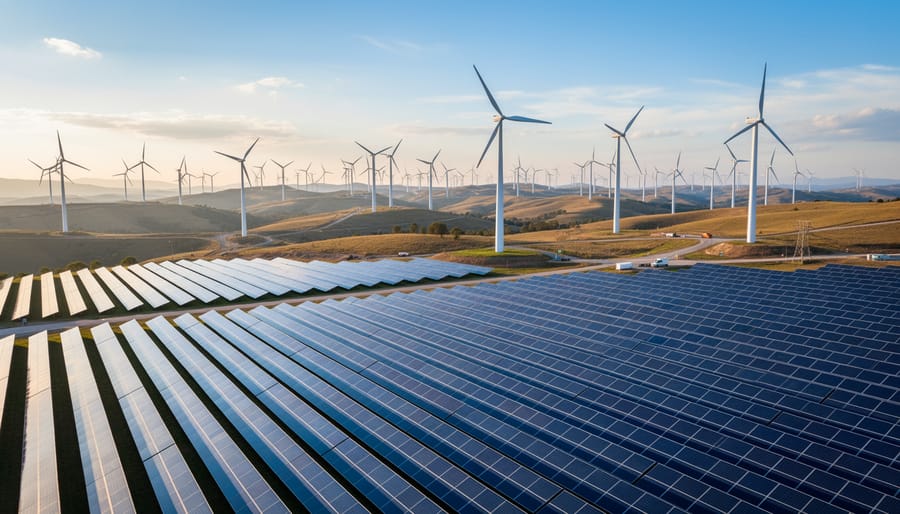
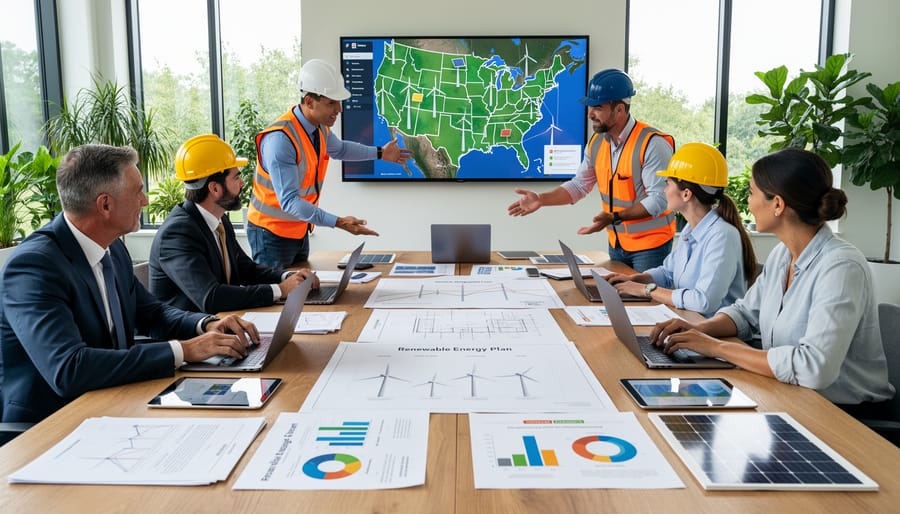
Government-led multilateral groups form the institutional backbone of international energy cooperation, providing formal platforms for nations to coordinate clean energy transitions through shared policy frameworks and pooled financial resources. These intergovernmental coalitions operate at the intersection of diplomacy and technical implementation, translating climate commitments into concrete renewable energy deployment strategies.
The International Renewable Energy Agency (IRENA) exemplifies this model as a treaty-based organization uniting 169 member countries. IRENA functions primarily as a knowledge broker and policy advisor, conducting technical assessments of renewable energy potential, developing standardized methodologies for grid integration, and publishing comprehensive deployment roadmaps that guide national energy planning. Rather than directly funding projects, IRENA leverages its convening power to facilitate technology transfer agreements and connect developing nations with financing sources. Its annual assemblies enable energy ministers to negotiate common positions on grid interconnection standards and solar equipment certification protocols.
Mission Innovation represents a complementary approach, a flexible coalition of governments and the European Union committed to doubling public clean energy research budgets. Launched with 24 participating countries, the initiative organizes collaborative research challenges around specific technology gaps, such as advanced photovoltaic materials and energy storage systems. Member nations contribute to shared innovation platforms while maintaining sovereign control over their research priorities, creating a network effect that accelerates breakthrough discoveries without requiring centralized bureaucracy.
These intergovernmental structures succeed by reducing transaction costs for bilateral cooperation and establishing neutral venues where competing nations can pursue mutual energy security interests.
Public-Private Energy Partnerships
Public-private partnerships blend the strategic reach of governments with corporate agility and academic rigor to bridge the gap between laboratory breakthroughs and commercial-scale deployment. These hybrid models pool risk and capital: a national energy ministry might provide seed funding and regulatory fast-tracking while a technology company contributes manufacturing expertise and a university supplies research infrastructure. The result is demonstration facilities that prove concepts at meaningful scale, whether a 50-megawatt floating solar array testing new bifacial modules or a pilot green hydrogen plant validating electrolyzer performance under real grid conditions.
These collaborations excel at de-risking emerging technologies that are too uncertain for purely private investment yet too commercially promising to remain confined to academic research. Governments gain proof points for policy decisions without shouldering full development costs. Corporations secure testing grounds and early market positioning. Research institutions translate findings into patents and publications. A well-structured partnership typically establishes clear milestones for technology readiness levels, shared intellectual property frameworks, and defined pathways from pilot to full commercialization, turning innovative photovoltaic designs or energy storage chemistries into bankable, scalable solutions.
Industry Consortia and Research Networks
Industry-driven consortia operate independently from government frameworks, bringing together manufacturers, utilities, and research institutions to tackle technical bottlenecks in energy deployment. The Solar Energy Industries Association (SEIA) coordinates supply chain resilience efforts across North America, addressing shortages in polysilicon, inverters, and tracking systems that constrain photovoltaic installations. European groups like SolarPower Europe focus on standardizing module specifications and testing protocols, reducing compatibility issues when integrating components from multiple suppliers.
Research networks such as the European Photovoltaic Technology Platform pool corporate R&D budgets to accelerate commercialization of tandem solar cells and bifacial modules. These collaborations cut development costs by sharing test facilities and patent licensing agreements. The China Photovoltaic Industry Association coordinates manufacturing efficiency improvements, achieving economies of scale that lowered global panel prices by 12% between 2024 and 2026.
Industry consortia also establish quality benchmarks. The International Electrotechnical Commission’s TC82 working group sets durability standards for panels operating in extreme climates, preventing premature failures that undermine investor confidence. By aligning technical specifications across borders, these networks simplify procurement for large-scale solar farms and accelerate adoption rates worldwide.
Core Strategies Employed by Energy Solutions Groups
Joint Research and Development Programs
Collaborative research programs allow multiple nations and institutions to share the financial burden of expensive energy innovation while accelerating breakthrough timelines. By pooling resources, participants gain access to specialized equipment, such as advanced materials testing labs or large-scale prototype facilities, that individual organizations could not justify funding alone. This shared infrastructure model reduces duplication and enables parallel experimentation across multiple research sites.
In photovoltaic development, joint programs have proven particularly effective for advancing perovskite solar cell technology, where synthesis techniques and stability testing require iterative cycles of material refinement. Consortia members can distribute specific research tasks: one lab might focus on crystallization methods while another tests encapsulation materials under extreme conditions. This division of labor compresses development timelines from decades to years.
Similarly, grid-scale battery research benefits from coordinated efforts where different teams explore competing chemistries, lithium-iron-phosphate, sodium-ion, and flow batteries, under standardized testing protocols. Shared data repositories allow real-time comparison of performance metrics, helping identify the most promising candidates for commercialization.
Green hydrogen programs leverage collective expertise in electrolysis efficiency, catalyst development, and system integration. Multi-partner projects can simultaneously test production methods at various scales, from laboratory bench tests to megawatt demonstration plants, generating comprehensive data sets that inform manufacturing strategies.
Policy Harmonization and Regulatory Standards
Global energy solutions groups tackle one of the most persistent obstacles to renewable deployment: the fragmented patchwork of national and regional regulations. When energy codes, grid connection procedures, and certificate systems differ across borders, they create transaction costs that delay projects and deter investment. Harmonization efforts focus on establishing compatible technical standards, such as voltage requirements, safety protocols for photovoltaic installations, and equipment testing procedures, so components certified in one country can be deployed elsewhere without redundant approvals.
Grid interconnection rules receive particular attention. Disparate requirements for metering, power quality, and utility agreements force developers to navigate separate approval processes for each jurisdiction, even when projects share transmission infrastructure. Collaborative groups work to standardize application procedures and response timelines, reducing delays that can stretch years.
Renewable energy certificate systems present another friction point. Incompatible tracking mechanisms prevent certificates earned in one region from being recognized elsewhere, limiting market liquidity. Alignment initiatives create mutual recognition frameworks and shared registries, enabling broader certificate trading and more efficient allocation of renewable generation. These standardization efforts don’t eliminate local autonomy but establish baseline compatibility that makes cross-border energy projects economically viable.
Financing Mechanisms and Investment Platforms
Global energy solutions groups leverage sophisticated financing mechanisms to overcome investment barriers in renewable energy, particularly in regions where traditional capital is scarce or risk-averse. Green bonds have emerged as a cornerstone instrument, allowing governments and corporations to raise dedicated funds for climate-aligned projects while offering investors transparent environmental impact metrics. By 2026, these bonds routinely finance utility-scale solar installations and grid infrastructure across developing economies.
Multilateral development banks coordinate their lending programs through energy solutions networks, pooling technical expertise and capital to reduce transaction costs. This coordination ensures projects meet international standards while spreading risk across multiple institutions. The World Bank, Asian Development Bank, and regional counterparts synchronize their renewable energy portfolios, creating predictable funding pipelines that attract private sector co-investment.
Blended finance structures combine concessional public funds with commercial capital, fundamentally altering the risk-return profile for photovoltaic projects in frontier markets. These arrangements typically use development finance to absorb first-loss risk or provide currency hedges, enabling pension funds and insurance companies to participate in opportunities they would otherwise avoid. The model has proven particularly effective for decentralized solar systems serving rural communities where revenue streams are modest but social impact is substantial.
The Impact of Global Energy Solutions Groups on Photovoltaic Deployment
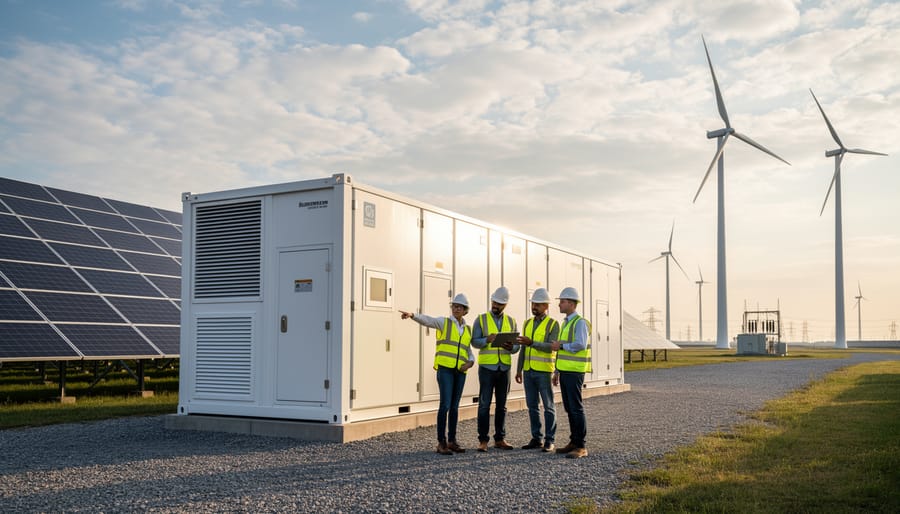
Global energy solutions groups have fundamentally reshaped photovoltaic deployment by addressing three bottlenecks that historically slowed solar adoption: fragmented technical standards, vulnerable supply chains, and inconsistent financing access. Their collective impact shows most clearly in the numbers, worldwide solar capacity additions in 2026 exceed the cumulative installations of the entire previous decade, a trajectory made possible through coordinated action rather than isolated national efforts.
Technology standardization stands as perhaps the most tangible contribution. Before these collaborative networks gained influence, photovoltaic cells and module specifications varied wildly across regions, complicating procurement and driving up costs for developers working in multiple markets. Groups like the International Electrotechnical Commission’s photovoltaic working groups and the Solar Energy Industries Association’s global partners established common testing protocols, efficiency measurement standards, and safety certifications. This harmonization cut project development timelines by 20-30 percent in cross-border installations and allowed manufacturers to achieve economies of scale previously impossible under fragmented regulatory regimes.
Supply chain resilience received systematic attention after disruptions exposed the risks of concentrated manufacturing. Energy solutions groups facilitated polysilicon production diversification, created shared warehousing networks for critical components, and developed traceability frameworks that reduced the likelihood of single-point failures. When geopolitical tensions threatened silicon wafer supplies in recent years, pre-negotiated buffer stock agreements, coordinated through multilateral energy groups, prevented the price spikes that would have stalled projects across three continents.
Financing mechanisms evolved through shared risk models that made previously uncommercial projects viable. Standardized power purchase agreement templates, developed collaboratively, reduced legal costs for small and mid-scale installations. Multilateral guarantee facilities pooled sovereign credit ratings to lower borrowing costs for solar power system deployments in emerging markets, effectively transferring the creditworthiness of developed economies to projects that lacked it. India’s recent gigawatt-scale solar parks and sub-Saharan Africa’s distributed generation buildout both relied on these blended finance structures.
The cumulative effect extends beyond installed capacity figures. These groups compressed the learning curve for new entrants, nations deploying their first utility-scale photovoltaic projects now avoid the costly missteps earlier adopters made, accessing proven designs, vetted contractors, and operational best practices through knowledge-sharing platforms that didn’t exist a decade ago.
Challenges Facing Global Energy Solutions Groups
Despite their essential role in advancing sustainable energy transitions, global energy solutions groups face significant hurdles that constrain their capacity to deliver rapid, large-scale change. Geopolitical tensions frequently undermine cooperation, as nations with conflicting strategic interests struggle to align on energy infrastructure priorities or technology-sharing agreements. Trade disputes over photovoltaic module tariffs, rare earth mineral access, and intellectual property rights create friction that slows project timelines and fragments supply chains.
Funding gaps present another persistent obstacle. While multilateral development banks and green financing mechanisms have expanded, the capital required to achieve global decarbonization targets far exceeds current commitments. Emerging economies often lack the institutional frameworks or credit ratings necessary to attract private investment at scale, leaving renewable energy projects underfunded or stalled. Blended finance structures can mitigate some risk, but they demand complex negotiations that many groups find difficult to coordinate across diverse stakeholders.
Technology diffusion barriers compound these challenges. Even when advanced photovoltaic systems or grid integration solutions prove effective in pilot programs, transferring them to contexts with different regulatory environments, technical standards, or workforce capabilities proves slow. Language barriers, incompatible equipment specifications, and insufficient local expertise hinder replication. Concerns about solar farm environment impact also vary by region, requiring tailored environmental assessments and community engagement strategies that delay deployment.
Coordinating stakeholders with competing interests adds layers of complexity. Governments prioritize energy security and economic competitiveness, corporations focus on return on investment, research institutions seek academic recognition, and civil society organizations advocate for equity and transparency. Reconciling these divergent agendas within a single collaborative framework demands skilled diplomacy, flexible governance structures, and consensus-building processes that consume time and resources. Without strong leadership and clear accountability mechanisms, many initiatives struggle to move from strategy documents to tangible outcomes.
The Future Trajectory of Collaborative Energy Solutions
The trajectory of global energy solutions groups increasingly points toward hybrid models that blend digital intelligence with physical infrastructure. Artificial intelligence and machine learning are becoming central to grid optimization efforts, enabling these collaborative networks to manage the variable output of solar and wind installations across interconnected regions. Advanced forecasting algorithms can predict renewable generation patterns days in advance, allowing consortium members to coordinate energy storage dispatch and cross-border transmission more effectively. These tools help solve the intermittency challenge that has historically limited photovoltaic deployment at scale.
Next-generation nuclear partnerships represent another frontier, with small modular reactors and fusion research attracting coordinated investment from both governmental and private-sector participants. These technologies complement renewable energy portfolios by providing baseload power that can stabilize grids as coal and natural gas plants retire. Several international research networks are pooling expertise to accelerate development timelines and share the substantial costs of nuclear innovation.
Climate adaptation is reshaping the mission of energy solutions groups beyond simple decarbonization. Coastal regions need resilient microgrids that can withstand extreme weather events. Drought-prone areas require energy systems that minimize water consumption. Heat-vulnerable populations depend on cooling solutions powered by distributed solar installations. These realities are pushing collaborative networks to integrate energy planning with broader resilience strategies, ensuring that sustainable energy systems can function reliably under climate stress.
The convergence of energy, water, agriculture, and urban planning within single collaborative frameworks marks a fundamental shift. Groups that once focused narrowly on power generation now address the interconnected resource challenges that climate change amplifies, creating holistic solutions that serve multiple objectives simultaneously.
Frequently Asked Questions
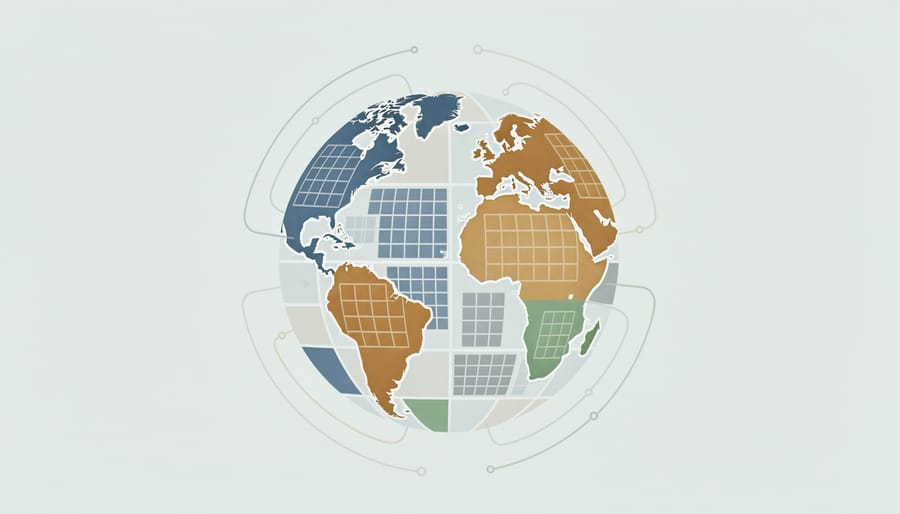
What is a Global Energy Solutions Group?
A global energy solutions group is any international coalition, consortium, or network of governments, corporations, research institutions, and civil society organizations working collaboratively to address energy challenges through shared resources, coordinated policy, and technology development. These groups range from formal intergovernmental bodies like IRENA to industry-led partnerships focused on specific technologies or regions.
How Are These Groups Funded?
Funding typically comes from a mix of member contributions (assessed dues from participating nations or organizations), project-specific grants from development banks, philanthropic foundations, and cost-sharing arrangements where multiple stakeholders invest in joint initiatives. Public-private partnerships often blend government seed funding with private sector investment to reduce financial risk for renewable energy pilots.
Can Private Companies and Research Institutions Participate?
Most global energy groups operate on multi-stakeholder models that welcome private sector engagement. Companies can join as associate members, participate in working groups, contribute technical expertise, or partner on demonstration projects. Research universities frequently collaborate through dedicated technical committees or joint R&D programs.
What defines a global energy solutions group?
Any international coalition bringing together governments, businesses, and research organizations to tackle energy challenges through shared policy, technology, and resources. They range from formal UN-affiliated bodies to industry consortia focused on specific technologies.
How are they funded?
Through member contributions, multilateral development bank financing, philanthropic grants, and cost-sharing arrangements for specific projects. Larger initiatives often use blended finance combining public seed capital with private investment.
How do these groups measure success?
Metrics include gigawatts of renewable capacity deployed, number of cross-border grid connections established, technology transfer agreements signed, and policy changes adopted by member states. Many also track carbon emissions avoided and improvements in energy access rates.
What role do they play in national energy policies?
They provide policy frameworks, technical standards, and best practice guidance that inform domestic regulations, while also creating accountability mechanisms for national commitments. However, implementation authority remains with individual governments.
When evaluating effectiveness, look for concrete outcomes rather than just membership size. The strongest groups show measurable progress on deployed renewable capacity, technology adoption rates in participating regions, and documented influence on national legislation. Transparency in governance, regular reporting on project milestones, and active stakeholder engagement are reliable indicators of a well-functioning coalition.
Global energy solutions groups have emerged as indispensable mechanisms for accelerating the worldwide shift to sustainable energy systems. No single nation possesses all the technical expertise, financial resources, or policy levers needed to address climate change and energy access simultaneously. These collaborative networks fill that gap by pooling knowledge, coordinating investments, and harmonizing standards across borders.
The impact on photovoltaic deployment illustrates their value concretely. By establishing common technical specifications, sharing manufacturing innovations, and creating financing pathways for solar projects in developing regions, these groups have dramatically reduced costs and expanded access to clean electricity. Similar patterns appear in grid modernization, energy storage development, and the integration of variable renewable sources into national power systems.
Challenges remain, geopolitical friction, uneven funding commitments, and the inherent complexity of aligning diverse stakeholders. Yet the trajectory points toward deeper collaboration as energy transition timelines compress and climate targets demand faster action.
For readers interested in sustainable energy, staying informed about these initiatives matters. Many groups publish research findings, policy recommendations, and project outcomes that inform local decisions. Educational institutions, businesses, and community organizations can participate through research partnerships, pilot programs, or advocacy for policies that enable cross-border energy cooperation. The transition to renewable energy is fundamentally a collective endeavor, and these global networks provide frameworks for meaningful contribution at every scale.