
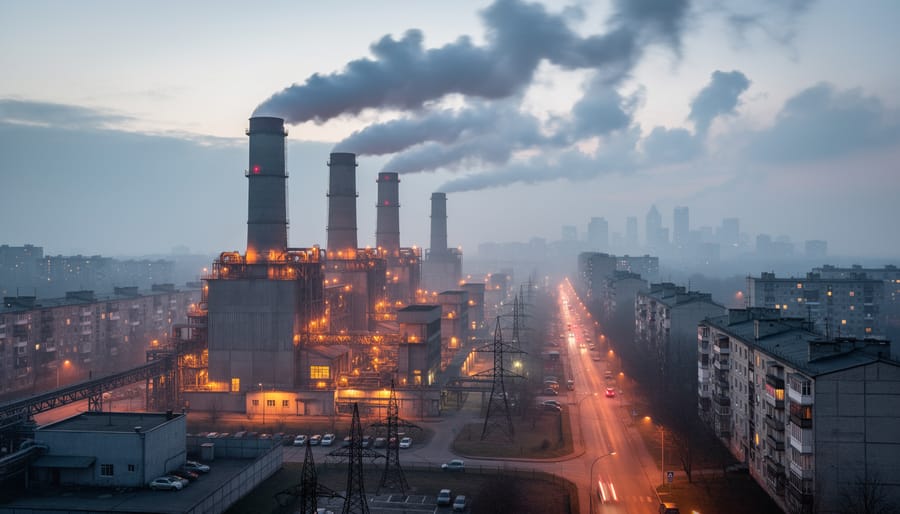
Energy production and air pollution share a fundamental connection: burning fossil fuels to generate electricity releases harmful pollutants into the atmosphere. Coal, natural gas, and oil combustion emit sulfur dioxide, nitrogen oxides, particulate matter, and carbon dioxide, degrading air quality and driving climate change. This relationship affects public health, environmental policy, and the global transition toward cleaner energy systems.
Understanding how energy generation impacts air quality matters for everyone navigating electricity choices in 2026. The chemistry is straightforward. When power plants burn carbon-based fuels, they release compounds that form smog, acid rain, and respiratory irritants. A single coal-fired power station can emit thousands of tons of pollutants annually, affecting communities hundreds of miles downwind.
The relationship extends beyond direct emissions. Energy infrastructure, from refineries to transmission networks, creates secondary pollution through methane leaks, volatile organic compounds, and fugitive dust. Different energy sources carry vastly different pollution profiles. Nuclear and renewable technologies produce minimal air contaminants during operation, while conventional fossil plants remain the dominant source of energy-related emissions worldwide.
This article explains the mechanisms linking energy systems to air quality, examines how various power generation methods differ in their atmospheric impact, and explores practical applications of this knowledge for policy decisions and personal energy choices. Regional variations matter, too. Developing economies relying heavily on coal face different challenges than nations with diversified energy portfolios. By mapping these connections clearly, readers can engage in informed discussions about energy transitions and environmental protection strategies shaping our collective future.
What Energy-Air Pollution Relationship Means
At its core, the relationship between energy and air pollution is a two-way exchange. When we generate electricity or power our transportation, we release substances into the atmosphere, combustion byproducts from burning coal, gas, or oil; particulate matter from industrial processes; greenhouse gases that trap heat. These emissions don’t simply vanish. They accumulate, transform chemically, and degrade air quality in measurable ways that affect human health, ecosystems, and climate systems.
The connection runs deeper than simple cause and effect. Air pollution doesn’t just result from energy production, it actively influences how well our energy systems perform. A layer of smog reduces the sunlight reaching solar panels, cutting their output by 15-25% in heavily polluted areas. Particulate matter settles on turbine blades and cooling towers, forcing power plants to work harder and consume more fuel to deliver the same electricity. This creates a feedback loop where pollution begets inefficiency, which requires more energy generation, which produces more pollution.
Understanding this relationship requires familiarity with several key terms:
- Emissions
- Substances released into the air from energy production processes, including gases, particulates, and chemical compounds that result from combustion or industrial activity.
- Criteria Pollutants
- Six common air pollutants regulated by environmental agencies, particulate matter (PM2.5 and PM10), nitrogen oxides (NOx), sulfur dioxide (SO2), carbon monoxide, ozone, and lead, each with documented health and environmental effects.
- Greenhouse Gases
- Heat-trapping gases like carbon dioxide, methane, and nitrous oxide that accumulate in the atmosphere and alter Earth’s energy balance, primarily released through fossil fuel combustion.
- Energy Externalities
- Hidden costs of energy production not reflected in electricity prices, including healthcare expenses from pollution-related illness, environmental cleanup, and climate damage.
- Atmospheric Deposition
- The process by which pollutants settle from the air onto land and water surfaces, either directly or through precipitation, affecting soil chemistry and water quality.
What makes this relationship particularly significant is its scale. Energy production accounts for roughly 70% of global sulfur dioxide emissions, 60% of nitrogen oxides, and 85% of carbon dioxide releases from human activities. These figures underscore why shifts in how we generate power, toward cleaner combustion technologies, renewable sources, or improved efficiency, translate directly into air quality outcomes. Every megawatt-hour produced leaves a pollution signature, and every pollution particle affects how efficiently we can produce the next megawatt-hour.
How the Energy-Pollution Connection Works
Direct Emissions from Energy Generation
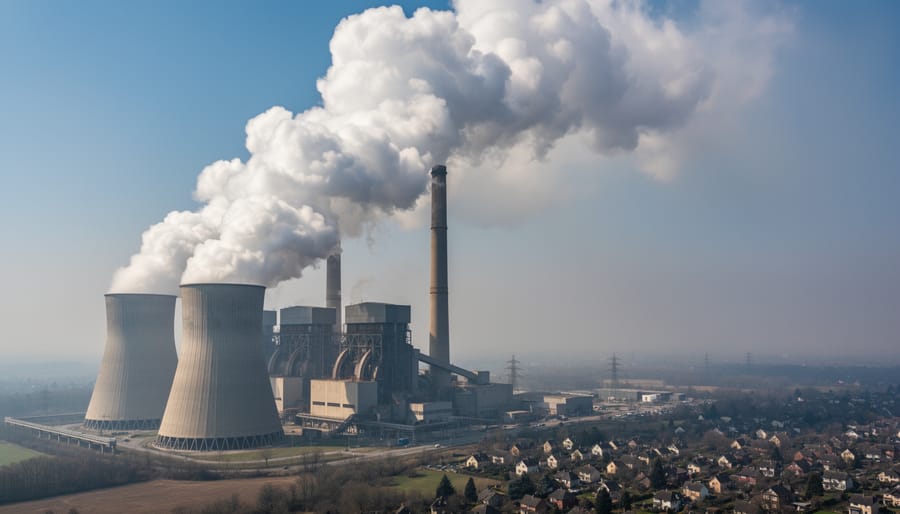
Direct emissions from energy generation occur at the precise moment fuel burns or converts to electricity. When coal, oil, or natural gas combusts in a power plant boiler, the chemical reaction breaks molecular bonds and releases energy alongside unwanted byproducts. These byproducts escape through smokestacks as gases and particles that immediately enter the atmosphere.
Coal-fired plants produce the heaviest pollution load. Burning coal releases sulfur dioxide when sulfur compounds in the fuel oxidize, nitrogen oxides from high-temperature combustion, particulate matter as ash and unburned carbon, mercury vapor, and carbon dioxide. A single 500-megawatt coal plant emits roughly 3 million tons of CO2 annually, along with thousands of tons of sulfur dioxide and nitrogen oxides.
Natural gas plants emit fewer pollutants per unit of electricity because gas burns cleaner and produces more energy per carbon atom. They still release nitrogen oxides from combustion heat and carbon dioxide as the primary byproduct, but sulfur dioxide and particulates remain minimal compared to coal.
Oil-fired plants fall between coal and gas in emission intensity. They produce significant nitrogen oxides, sulfur dioxide depending on fuel grade, and particulate matter. Heavy fuel oil generates more pollutants than lighter distillates.
The emission rate varies with plant efficiency. Older facilities using subcritical boilers waste more fuel as heat, requiring more combustion and producing more pollution per kilowatt-hour. Modern combined-cycle gas plants achieve 60 percent efficiency, cutting emissions substantially compared to older designs operating at 33 percent efficiency.
Indirect Pollution Across the Energy Chain
Energy’s air pollution footprint extends far beyond the smokestack. Before a power plant burns its first ton of coal or cubic meter of gas, extraction activities have already released significant pollutants into the atmosphere. Coal mining operations emit methane, a greenhouse gas 28 times more potent than CO2 over a century, alongside particulate matter from blasting and hauling. Open-pit mines generate massive dust clouds that travel hundreds of miles downwind.
Petroleum extraction vents volatile organic compounds and methane during drilling, while fracking operations release these same compounds plus silica dust. Natural gas pipelines leak methane at compressor stations and connections throughout their networks; studies suggest 2-3% of all extracted gas escapes before reaching consumers.
Fuel processing adds another pollution layer. Refineries emit sulfur compounds, nitrogen oxides, and benzene during crude oil conversion. Coal washing releases heavy metals into waterways, which then evaporate into the air. Transportation of fuels by ship, rail, and truck burns diesel, spreading soot and NOx across supply routes.
Even after energy generation, waste disposal continues the cycle. Coal ash storage sites release windborne particulates and mercury vapor. Nuclear fuel reprocessing, though minimal in air pollution terms, requires energy-intensive operations that indirectly contribute emissions elsewhere in the grid.
How Pollution Reduces Energy System Efficiency
Pollution doesn’t just result from energy production, it degrades the systems that generate power. Particulate matter settling on photovoltaic arrays creates an opaque layer that blocks sunlight from reaching the cells, and research confirms that dust reduces solar efficiency by 20-50% in heavily polluted regions. This loss directly translates to reduced output and higher costs per kilowatt-hour, forcing operators to clean panels more frequently or accept diminished returns. Smog and haze scatter incoming radiation before it reaches collectors, further cutting solar panel efficiency even when surfaces remain clean.
Thermal power plants face parallel problems. Elevated air temperatures from urban heat islands and pollution increase cooling water requirements, while particulates clog intake filters and foul heat exchangers, reducing turbine efficiency. On high-pollution days, some gas turbines derate their output to protect components from corrosive contaminants. Atmospheric conditions also shift demand patterns: poor air quality drives up air conditioning loads precisely when smog reduces generation capacity, tightening grid margins and raising the risk of outages.

Major Energy Sources and Their Pollution Profiles
Fossil Fuel Power Generation
Coal, natural gas, and oil power plants collectively supply more than half of global electricity and account for the largest share of energy-related air pollution. When these fuels burn, they release a characteristic cocktail of pollutants: fossil plants emit SO2, NOx, PM mercury, and carbon dioxide at scales that dwarf other stationary sources.
Coal plants produce the heaviest pollution burden. A single large coal-fired unit can emit thousands of tons of sulfur dioxide per year, along with nitrogen oxides that drive smog formation and fine particulate matter small enough to penetrate lung tissue. Mercury released from coal combustion bioaccumulates in fish, creating public health advisories in watersheds near power stations. Carbon dioxide emissions from coal plants range from 900 to 1,000 grams per kilowatt-hour generated, roughly double the rate of natural gas facilities.
Natural gas combined-cycle plants achieve better performance by capturing waste heat from a gas turbine to drive a steam turbine, pushing thermal efficiency above 60 percent. This efficiency gain cuts fuel use and emissions per unit of electricity generated. CO2 output drops to roughly 400 grams per kilowatt-hour, and sulfur dioxide levels fall near zero because natural gas contains minimal sulfur. Nitrogen oxides still form during high-temperature combustion, though selective catalytic reduction systems can remove 90 percent or more.
Oil-fired plants, now less common in developed countries, occupy a middle position. They emit more sulfur than gas but less than coal, and their use often spikes during peak demand periods when other capacity runs short. Emissions control retrofits, scrubbers for sulfur, electrostatic precipitators for particulates, low-NOx burners, can reduce pollution substantially, but they add cost and energy penalties that reduce net plant efficiency by several percentage points.
Renewable Energy and Air Quality
Renewable energy sources deliver profound air quality benefits by eliminating combustion-stage emissions entirely. A solar power system generates electricity through photovoltaic conversion without releasing sulfur dioxide, nitrogen oxides, particulate matter, or carbon dioxide during operation. Wind turbines and hydroelectric dams similarly produce zero direct emissions while generating power, fundamentally breaking the link between energy production and air pollution that characterizes fossil fuel plants.
The manufacturing phase, however, does create environmental impacts. Solar panel production requires energy-intensive processes including silicon purification, glass manufacturing, and metal extraction. Wind turbine fabrication demands steel, fiberglass composites, and rare earth elements for generators. These upstream activities generate emissions wherever they occur, though the quantities remain far lower than fossil fuel combustion over equivalent energy output. A comprehensive lifecycle analysis reveals that renewable installations typically offset their manufacturing emissions within six months to two years of operation, then provide decades of pollution-free generation.
Understanding how solar works clarifies why operational emissions stay at zero: photons excite electrons directly, bypassing chemical reactions entirely. Hydroelectric facilities redirect water flow through turbines, and wind systems capture kinetic energy mechanically. The net air quality benefit proves substantial, particularly in regions transitioning from coal dependence. Studies measuring pollutant concentrations near renewable installations versus fossil plants document dramatic reductions in respiratory irritants and smog precursors, demonstrating that lifecycle emissions remain negligible compared to conventional generation.
Nuclear and Other Low-Emission Sources
Nuclear power generates electricity through fission reactions that produce no direct air emissions during operation. Unlike fossil fuel plants, nuclear facilities release no sulfur dioxide, nitrogen oxides, or particulate matter into the atmosphere. The primary environmental considerations involve radioactive waste management and thermal discharge to water bodies, not air pollution. This makes nuclear energy one of the lowest air-pollutant energy sources available at scale.
Geothermal power similarly avoids combustion, extracting heat from underground reservoirs to drive turbines. Modern closed-loop geothermal systems release minimal emissions, though older flash-steam plants can vent small amounts of hydrogen sulfide and carbon dioxide naturally present in geothermal fluids. The air quality impact remains negligible compared to fossil fuels.
Biomass energy presents a more complex picture. While technically renewable, biomass combustion releases substantial particulate matter, carbon monoxide, and nitrogen oxides. Wood-burning facilities can emit pollution levels approaching coal plants without proper emission controls. The net carbon impact depends on forest management practices and whether biomass replaces fossil fuels or simply adds to total energy consumption. Residential wood burning contributes significantly to wintertime particulate pollution in many regions, demonstrating that renewable classification does not automatically mean clean air.
Where Energy-Related Air Pollution Matters Most

Understanding where the energy-pollution relationship matters most helps direct resources and policy attention to areas with the greatest impact on both air quality and human health. The connection between energy production and atmospheric contamination shapes decisions in multiple domains, from municipal planning to international climate agreements.
Urban Air Quality Management
Cities bear the heaviest burden of energy-related air pollution, with transportation, heating, and local power generation combining to create elevated pollutant concentrations. Municipal governments worldwide use real-time emissions data from power plants and vehicles to implement alerts, restrict traffic during high-pollution episodes, and plan infrastructure investments. Beijing, Delhi, and Los Angeles have all restructured their energy systems specifically to address air quality crises, demonstrating that recognizing the energy source of pollution drives concrete mitigation actions.
Power Sector Regulations and Emissions Standards
National and regional regulatory frameworks target energy facilities as controllable pollution sources. The U.S. Clean Air Act, European Union emissions trading system, and China’s Ultra-Low Emissions standards all establish limits on sulfur dioxide, nitrogen oxides, particulate matter, and mercury from power plants. These regulations work because solar energy reduces emissions compared to fossil alternatives, making technology substitution a viable compliance path alongside scrubber installation and efficiency improvements.
Key Application Areas
The energy-pollution relationship informs decisions across multiple sectors:
- Regulatory compliance and emissions standards for power generation facilities
- Clean energy transitions that prioritize sources with minimal air quality impacts
- Air quality improvement programs targeting the highest-emission energy sources
- Health impact assessments quantifying pollution-related illness from specific energy facilities
- Photovoltaic deployment strategies in regions where coal dominance drives poor air quality
- Energy efficiency initiatives that reduce total pollution by lowering generation requirements
Public Health Policy
Epidemiological studies consistently link proximity to fossil fuel plants with elevated rates of asthma, cardiovascular disease, and premature mortality. Public health agencies use this connection to advocate for plant retirements, buffer zones, and renewable energy investments. When a coal plant closes, local particulate matter drops measurably within months, a direct cause-and-effect relationship that justifies health-driven energy policy.
Climate Mitigation Strategies
International climate frameworks recognize that addressing greenhouse gas emissions requires transforming energy systems. The Paris Agreement’s nationally determined contributions center on decarbonizing electricity generation because energy combustion produces both climate-warming CO2 and health-damaging co-pollutants. Strategies that reduce carbon simultaneously improve air quality, making energy sector reform a dual-benefit climate solution.
The Global Context: Regional Variations and Energy Transitions
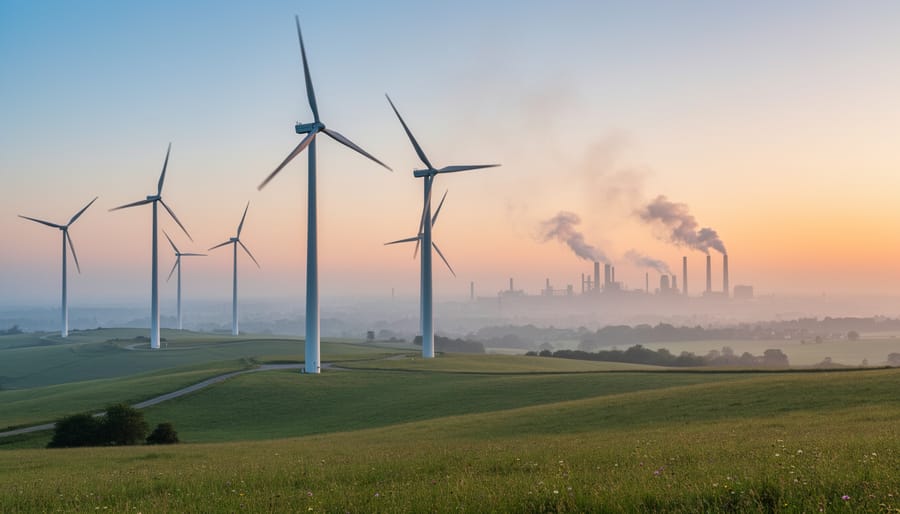
The connection between energy production and air pollution looks dramatically different depending on where you draw the map. Countries relying heavily on coal, including India, Indonesia, and parts of China, experience particulate matter concentrations orders of magnitude higher than nations with cleaner energy mixes. China’s coal share dropped from 72% in 2012 to approximately 56% by 2025, yet absolute coal consumption remains substantial due to growing energy demand. This sustained reliance translates directly into elevated sulfur dioxide and nitrogen oxide emissions, despite improvements in plant efficiency and scrubber technology.
In contrast, Scandinavia demonstrates what aggressive renewable deployment achieves. Norway generates over 95% of its electricity from hydropower, while Denmark derives roughly half its supply from wind. These nations consistently report among the lowest PM2.5 levels globally. Costa Rica operates similarly, meeting nearly all electricity needs through hydro, geothermal, and wind resources. The air quality difference is measurable: annual average particulate concentrations in Oslo hover around 6-8 micrograms per cubic meter, while Delhi frequently exceeds 150.
Economic development shapes these patterns. Wealthier nations typically afford stricter emission controls, retrofit existing plants with advanced scrubbers, and subsidize renewable infrastructure. Lower-income countries face a trade-off between energy access and air quality, often prioritizing immediate electricity availability over pollution mitigation. Sub-Saharan Africa’s energy mix varies enormously, South Africa burns substantial coal while Kenya taps extensive geothermal resources. This variability reflects both resource endowments and financial capacity to fund cleaner alternatives.
Regulatory frameworks accelerate or hinder transitions. The European Union’s emission trading system places a price on carbon, incentivizing utilities to phase out high-polluting plants. Several Asian governments now implement cap-and-trade programs or direct coal phase-down schedules, though enforcement consistency varies. Latin America’s renewable auctions have driven solar and wind costs down sharply, making clean energy economically competitive without heavy subsidies.
Technology transfer matters too. As PV system basics become standardized globally, manufacturing scale economies reduce costs for all adopters. Battery storage advances in one region benefit utilities worldwide, enabling intermittent renewables to displace baseload fossil generation. The energy-pollution relationship thus depends on local fuel choices, regulatory will, economic capacity, and access to proven clean technologies refined through international experience.
Common Questions About Energy and Air Pollution
Despite growing awareness of the energy-pollution connection, several common misconceptions persist about how different energy choices affect air quality. Understanding these nuances helps individuals and policymakers make more informed decisions about energy transitions and their expected environmental outcomes.
Does renewable energy produce zero pollution?
While solar and wind produce no direct emissions during operation, their manufacturing, transportation, and installation generate some pollution. The lifecycle emissions remain dramatically lower than fossil fuels, typically 95-98% less, making renewables substantially cleaner overall.
How do electric vehicles affect the energy-pollution equation?
Electric vehicles shift emissions from tailpipes to power plants, so their air quality impact depends entirely on the grid’s energy mix. In regions with high renewable penetration, EVs offer significant pollution reductions; where coal dominates generation, the net benefit shrinks considerably.
What is the cleanest form of energy production?
Wind and solar photovoltaic systems produce the least air pollution across their full lifecycle, followed closely by hydroelectric and nuclear power. All four generate electricity with minimal ongoing emissions, though each carries distinct environmental trade-offs beyond air quality.
Can improving energy efficiency reduce air pollution?
Energy efficiency directly reduces pollution by lowering total generation requirements. Every kilowatt-hour saved through better insulation, efficient appliances, or LED lighting means less fuel burned and fewer pollutants released, regardless of the energy source.
The question of individual impact warrants particular attention. Your energy choices matter, but their pollution effects vary enormously by location. Switching to solar panels in a coal-heavy grid delivers far greater air quality benefits than the same action in a region already running on hydroelectric power. Similarly, choosing an electric vehicle produces different outcomes in California versus West Virginia due to vastly different grid compositions.
Energy storage introduces another layer of complexity. Battery systems don’t generate pollution during discharge, but their manufacturing involves mining and chemical processing with associated emissions. However, storage enables higher renewable energy penetration by smoothing intermittent supply, ultimately displacing more polluting fossil fuel generation. The net effect across the system remains positive for air quality.
The “clean energy” label itself deserves scrutiny. Marketing often conflates carbon-free with pollution-free, yet natural gas plants emit far less CO2 than coal while still releasing nitrogen oxides and particulates. Nuclear power produces no air pollution during operation but generates radioactive waste requiring permanent storage. Context matters: what qualifies as clean depends on whether you’re prioritizing climate impact, local air quality, or broader environmental effects. Understanding these distinctions helps cut through simplified narratives about energy choices.
The relationship between energy production and air pollution cuts both ways: our power systems shape the air we breathe, and polluted air in turn degrades the performance of those systems. Energy generation stands as one of the largest contributors to airborne pollutants worldwide, releasing everything from particulate matter and sulfur dioxide to greenhouse gases that warm the planet. Yet this isn’t a static problem. The ongoing transition toward cleaner energy sources demonstrates that we can measurably improve air quality through deliberate technology choices and infrastructure investments.
Shifting from coal to natural gas, expanding wind and solar capacity, and improving the efficiency of existing plants all translate directly into fewer pollutants entering the atmosphere. These changes matter for public health, reducing respiratory illnesses and premature deaths linked to poor air quality. They also matter for climate stability, cutting the carbon emissions that drive long-term warming.
Understanding this connection requires looking beyond the power plant smokestack. Lifecycle impacts, from mining and drilling through manufacturing, operation, and disposal, shape the true environmental cost of any energy system. A comprehensive view helps policymakers design effective regulations, guides utilities in planning cleaner grids, and empowers individuals to make informed choices about energy use.
As energy demand continues growing globally, the decisions we make now about fuel sources, efficiency standards, and pollution controls will determine whether air quality improves or deteriorates in the decades ahead. Recognizing energy and air pollution as deeply interconnected challenges, rather than separate issues, gives us better tools to address both.