
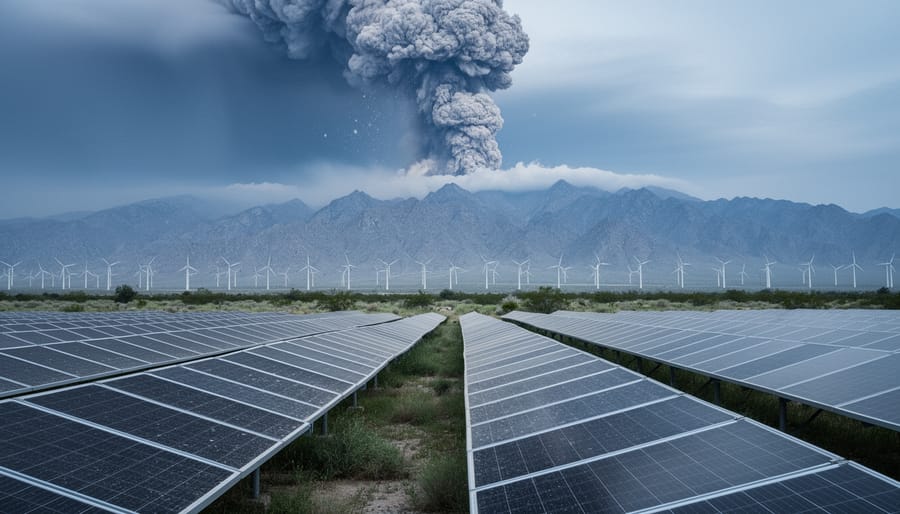
Volcanic pollution occurs when volcanoes release gases, ash, and particulates into the atmosphere during eruptions and periods of elevated activity, creating environmental impacts that range from local air quality degradation to global climate cooling. Unlike anthropogenic pollution, which humans can regulate and reduce, volcanic emissions are episodic, unpredictable, and entirely beyond our control, yet they introduce many of the same pollutants we work to eliminate from industrial processes: sulfur dioxide, carbon dioxide, particulate matter, and toxic heavy metals.
Understanding how volcanic pollution affects the environment has become increasingly relevant for energy planners and sustainability professionals in 2026. Volcanic ash clouds can blanket photovoltaic installations hundreds of kilometers from an eruption, cutting power generation by more than 80 percent within hours. Sulfur dioxide emissions form aerosols that cool the planet temporarily but also corrode metal components in wind turbines and solar tracking systems. Meanwhile, volcanic carbon dioxide emissions, though dwarfed by human sources on an annual basis, complicate our efforts to measure and attribute climate change accurately.
This article explores the mechanisms through which volcanic activity disrupts atmospheric chemistry and ecosystem function, categorizes the primary types of volcanic pollution by their environmental reach and duration, and examines the specific threats these natural events pose to renewable energy infrastructure. Whether you manage solar arrays in regions with active geology or simply want to understand how natural pollution compares to industrial sources, the following sections provide a comprehensive framework grounded in current atmospheric science and energy resilience research. The goal is to equip readers with the knowledge needed to assess volcanic risk in environmental and energy contexts, fostering informed discussions about natural versus anthropogenic impacts on our planet.
What Volcanic Pollution Means for the Environment
Volcanic pollution refers to the natural release of gases, solid particles, and chemical compounds into the atmosphere and surrounding ecosystems during volcanic eruptions and through ongoing activity at active volcanic sites. Unlike industrial pollution, volcanic emissions originate from deep Earth processes where molten rock, dissolved gases, and fragmented materials escape to the surface, altering atmospheric chemistry and environmental conditions both locally and, in severe cases, globally.
The connection between volcanic activity and energy and air pollution becomes clear when examining the specific pollutants volcanoes release. During eruptions, massive quantities of sulfur dioxide (SO₂) enter the stratosphere, where it converts into fine sulfate particles that can linger for months or years. Carbon dioxide (CO₂) continuously seeps from volcanic vents and fissures, contributing natural greenhouse gases to the atmosphere. Ash clouds, composed of pulverized rock, minerals, and volcanic glass, spread across hundreds or thousands of kilometers depending on eruption intensity and wind patterns. Volcanic aerosols, microscopic droplets and particles suspended in the air, scatter and absorb sunlight in ways that affect regional and global temperatures.
- Volcanic Pollution
- The natural contamination of air, water, and soil through the release of gases, ash, and chemical compounds from volcanic activity. It differs from anthropogenic pollution in its episodic nature and geochemical origins.
- Pyroclastic Material
- Fragmented rock, pumice, and volcanic debris ejected during explosive eruptions. These materials range from fine ash particles to boulder-sized blocks that devastate nearby landscapes.
- Volcanic Aerosols
- Microscopic liquid and solid particles suspended in the atmosphere following eruptions, primarily sulfate droplets formed from sulfur dioxide. They reflect incoming solar radiation, causing temporary atmospheric cooling.
- Sulfur Dioxide Emissions
- The release of SO₂ gas from magma as it rises and depressurizes, representing one of the most significant volcanic atmospheric pollutants. At high altitudes, it forms reflective aerosols that influence climate patterns.
- Volcanic Ash Dispersal
- The atmospheric transport and deposition of fine volcanic particles across regional or continental distances. Ash fall degrades air quality, contaminates water supplies, and damages infrastructure including energy systems.
Distinguishing between eruption types helps clarify the environmental impacts. Acute pollution events occur during explosive eruptions, releasing concentrated pollutants over hours to weeks with dramatic immediate effects on air quality, sunlight penetration, and ecosystems. Chronic emissions characterize persistently active volcanoes that continuously vent gases and particles at lower rates, creating long-term exposure zones where sulfur dioxide, carbon dioxide, and other compounds accumulate in the local environment. Both patterns pose distinct challenges for human populations, natural ecosystems, and energy infrastructure situated in volcanic regions.
How Volcanic Emissions Affect the Atmosphere and Climate
Short-Term Atmospheric Cooling
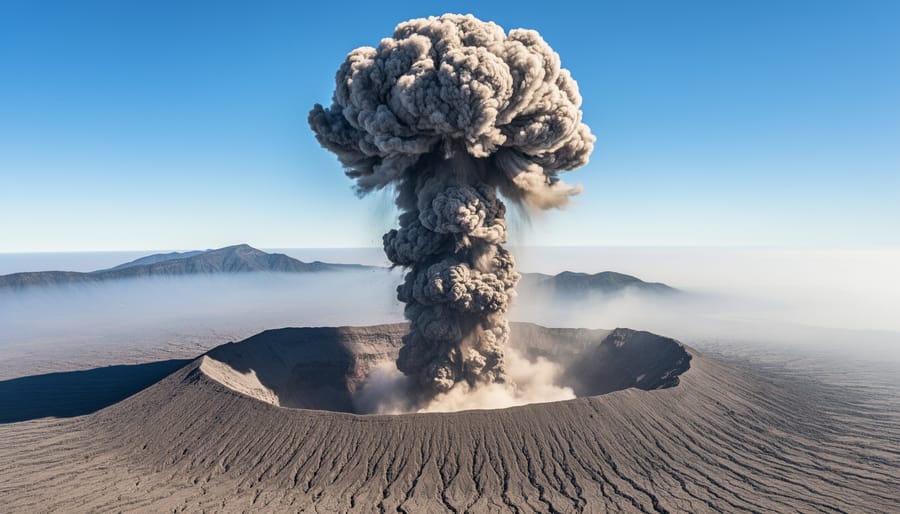
When a major volcanic eruption injects massive quantities of sulfur dioxide into the stratosphere, a remarkable cooling effect begins. The gas rapidly reacts with water vapor to form sulfuric acid aerosols tiny reflective particles that spread across the globe within weeks. These particles create what scientists call the stratospheric veil, a thin layer suspended 10 to 50 kilometers above Earth’s surface that reflects a portion of incoming sunlight back into space before it can warm the planet.
The cooling effect is measurable and significant. The 1991 eruption of Mount Pinatubo, for example, lowered global average temperatures by approximately 0.5 degrees Celsius for nearly two years. Larger historical eruptions have caused even greater drops. The aerosols persist in the stratosphere for months to several years because that atmospheric layer lacks the weather patterns and precipitation that would otherwise wash them out. This temporary but noticeable temperature reduction can disrupt seasonal weather patterns, affect agricultural growing seasons, and alter the amount of solar energy available for photovoltaic systems during the cooling period.
Long-Term Greenhouse Gas Contributions
Volcanoes release carbon dioxide continuously through both explosive eruptions and persistent degassing from active vents, fissures, and geothermal systems. Current scientific estimates place total volcanic CO2 output at roughly 200 to 600 million tons per year, encompassing emissions from subaerial volcanoes, submarine volcanic systems, and mid-ocean ridge activity. This natural contribution represents a fundamental component of Earth’s carbon cycle, one that has operated for geological timescales.
To understand volcanic CO2 in perspective, consider that human activities now generate over 35 billion tons of carbon dioxide annually through fossil fuel combustion, industrial processes, and land use changes. This means anthropogenic emissions exceed natural volcanic output by a factor of approximately 60 to 175, depending on the year and volcanic activity levels. While individual eruptions can release substantial CO2 pulses, measured in tens of millions of tons, the cumulative effect remains orders of magnitude smaller than human contributions to atmospheric greenhouse gas concentrations.
The distinction matters for climate discussions: volcanic CO2 operates within Earth’s natural carbon balance, whereas anthropogenic emissions represent a rapid addition that overwhelms natural absorption mechanisms.
Air Quality and Particulate Matter
Volcanic ash and fine particulates degrade local and regional air quality by suspending sharp, glassy fragments and sulfate-based aerosols in the atmosphere. These particles, ranging from coarse ash (>10 micrometers) to ultrafine PM2.5, irritate airways, exacerbate asthma, and pose serious respiratory effects of ash exposure for populations downwind of active volcanoes. Dispersion depends on eruption column height, wind patterns, and particle size: explosive eruptions can loft ash thousands of kilometers, blanketing cities and agricultural areas far from the source. Even during non-eruptive phases, persistent volcanic smog (vog) from sulfur dioxide creates chronic air quality problems in volcanic regions, reducing visibility and triggering respiratory distress in vulnerable groups.
Categories of Volcanic Environmental Impact
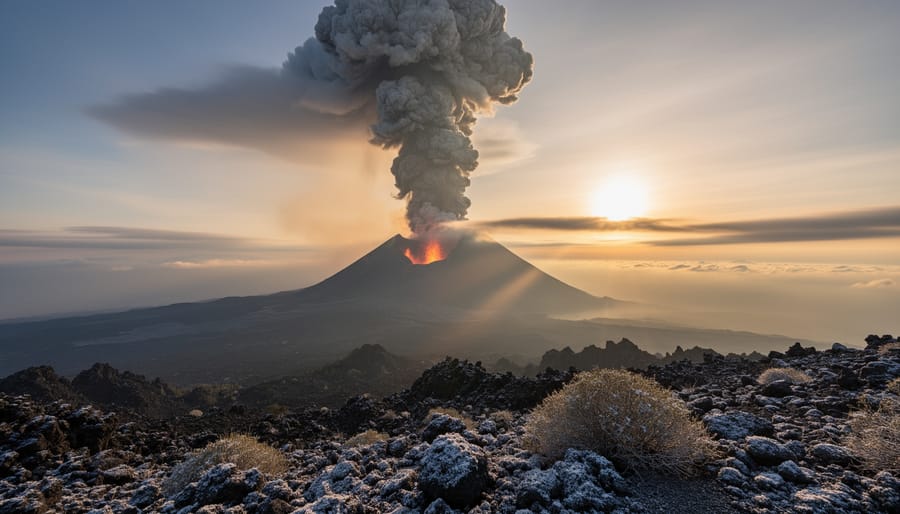
Volcanic pollution affects the environment across multiple dimensions, each with distinct mechanisms, timescales, and spatial reach. Understanding these categories helps clarify both the complexity of volcanic impacts and their specific relevance to energy infrastructure and resource management.
Atmospheric and Climate Effects represent the most widely recognized category. Volcanic emissions alter atmospheric composition through sulfur dioxide conversion into reflective sulfate aerosols, carbon dioxide additions to greenhouse gas budgets, and massive ash cloud dispersal. These atmospheric changes operate on timescales ranging from immediate air quality degradation lasting days to cooling effects persisting for years after major eruptions. The geographic scale varies dramatically: localized vog (volcanic smog) from persistent degassing affects regions within hundreds of kilometres, while stratospheric aerosol veils from explosive eruptions can influence global temperatures.
Hydrological Contamination occurs when volcanic materials interact with water systems. Acid rain forms when sulfur dioxide and other acidic gases dissolve in precipitation, lowering pH levels in rivers, lakes, and groundwater supplies across broad downwind areas. Lahars, volcanic mudflows mixing ash, rock fragments, and water, contaminate water supplies with sediment and dissolved chemicals while destroying riparian ecosystems. These flows can persist for years after eruptions as loose ash remobilizes during heavy rainfall, creating recurring water quality problems for communities and hydroelectric facilities drawing from affected watersheds.
Soil Chemistry Alterations follow ashfall and acid deposition. Fresh volcanic ash initially raises soil pH and introduces nutrients like phosphorus and potassium, but heavy deposits smother vegetation and alter drainage patterns. Acidic compounds leaching from ash can damage crop roots and change soil microbial communities. Agricultural lands may require years to recover productivity, while native ecosystems experience shifts in plant species composition favouring acid-tolerant varieties.
The major volcanic environmental impact categories include:
- Atmospheric and climate disruption from aerosols, gases, and particulate matter
- Hydrological contamination through acid rain and lahar sediment loading
- Agricultural soil chemistry changes affecting crop viability and ecosystem health
- Ecosystem disruption from habitat destruction and food web alterations
- Infrastructure damage to energy transmission lines, water treatment facilities, and solar installations
Ecosystem Disruption extends beyond individual species impacts to encompass broader ecological relationships. Ash blankets eliminate photosynthesis in affected areas, collapsing local food webs. Aquatic ecosystems suffer from ash-induced turbidity blocking light penetration and smothering benthic organisms. Volcanic gases create dead zones where concentrations reach toxic levels for fauna. Recovery timelines depend on eruption severity, with pioneer species gradually recolonizing barren landscapes over decades while mature ecosystem structure may require centuries to re-establish.
Each impact category connects to energy resource challenges in specific ways, from atmospheric aerosols reducing solar generation efficiency to hydrological contamination threatening hydroelectric water quality to ecosystem disruption affecting biomass energy sustainability in volcanic regions.
Direct Impacts on Energy Infrastructure and Resources
Damage to Solar Energy Systems
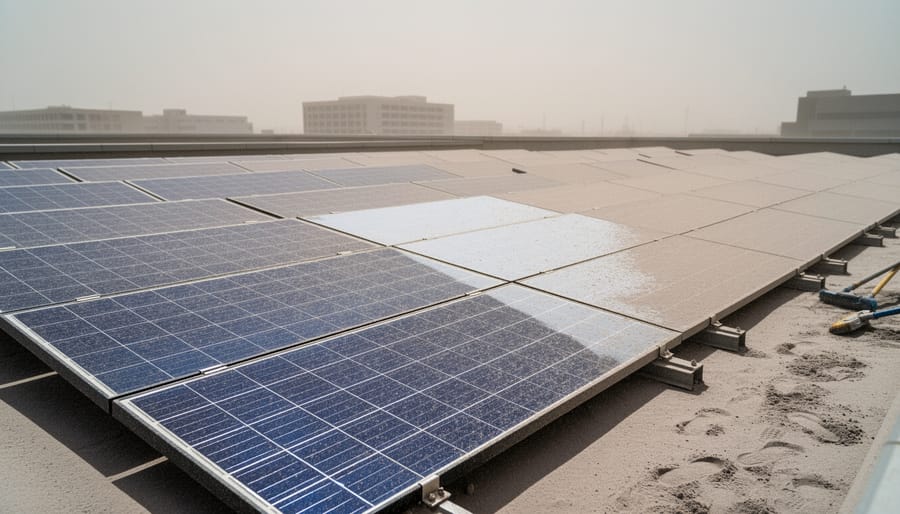
Volcanic ash poses a direct and measurable threat to solar energy generation. When ash particles settle on panel surfaces, they create an opaque layer that blocks sunlight from reaching photovoltaic cells reducing power output by 30-90% depending on deposit thickness. A millimeter-thick coating can cut efficiency in half, while heavier ashfall during major eruptions can render panels completely non-functional until cleaned.
Beyond simple light blockage, volcanic ash causes abrasive surface damage. The sharp, angular particles scratch protective glass layers when wind moves them across panels or during cleaning attempts, creating permanent micro-scratches that reduce long-term performance even after ash removal. This abrasive quality makes standard cleaning techniques risky.
Cleaning presents substantial logistical challenges. Ash mixed with moisture forms a cement-like paste that resists simple rinsing, requiring careful manual cleaning with soft tools to avoid further damage. For large installations, mobilizing crews and equipment across extensive solar power system arrays becomes resource-intensive, especially when ashfall continues intermittently.
Sulfate aerosols from volcanic emissions add another layer of complexity. While they don’t deposit on panels, they scatter incoming sunlight, increasing diffuse radiation at the expense of direct beam radiation. Most solar panels perform best with direct sunlight, so this atmospheric scattering reduces overall generation efficiency regionally, affecting systems far beyond the immediate ashfall zone without causing the physical damage that might harm solar farms in volcanic proximity.
Effects on Wind and Hydroelectric Generation
Volcanic ash poses serious mechanical threats to wind turbines. The fine, abrasive particles infiltrate turbine gearboxes and bearings, accelerating wear on moving parts designed for decades of operation. Ash coating rotor blades disrupts their aerodynamic profile, reducing generation efficiency by 15-30% depending on deposit thickness. In severe ashfall events, operators often shut down turbines entirely to prevent permanent damage, sacrificing weeks of production during cleanup.
Hydroelectric systems face contamination challenges when volcanic ash settles into reservoirs and water intake structures. The suspended particles clog filtration systems and increase turbine erosion rates as abrasive material passes through generation equipment. Water quality degradation from ash and dissolved volcanic chemicals can render reservoirs temporarily unusable for power generation.
Lahars, volcanic mudflows mixing ash, rock, and water, present catastrophic risks to dam infrastructure. These dense flows, traveling at speeds exceeding 60 kilometers per hour, can overwhelm spillways, damage intake structures, and deposit massive sediment volumes that reduce reservoir capacity. The 1985 Nevado del Ruiz eruption in Colombia demonstrated this vulnerability when lahars destroyed hydroelectric facilities downstream, causing prolonged power disruptions. Volcanic debris flows also compromise water management systems critical for controlling reservoir levels and ensuring consistent generation output.
Risks to Fossil Fuel and Geothermal Operations
Volcanic gases pose significant corrosion threats to fossil fuel operations near active volcanic zones. Sulfur dioxide and hydrogen sulfide create acidic conditions that accelerate the degradation of drilling equipment, pipelines, and storage facilities. Oil and gas extraction sites in volcanic regions face operational disruptions when ash contaminates machinery, clogs filtration systems, and damages compressors.
Geothermal plants face a particularly ironic vulnerability. Despite harnessing volcanic heat as their energy source, they remain susceptible to the very systems they exploit. Sudden pressure changes during volcanic unrest can damage wells and heat exchangers. Increased concentrations of acidic gases in geothermal fluids corrode turbines and piping at accelerated rates. The 2014 eruption at Bardarbunga in Iceland forced temporary shutdowns of nearby geothermal facilities as seismic activity threatened well integrity.
These operations require specialized corrosion-resistant materials and real-time monitoring of volcanic gas concentrations to maintain safe, continuous operation in volcanically active areas.
Real-World Applications and Case Studies
The 1991 eruption of Mount Pinatubo in the Philippines offers perhaps the most striking modern demonstration of volcanic pollution’s far-reaching energy consequences. The eruption injected roughly 20 million tons of sulfur dioxide into the stratosphere, creating a global aerosol veil that reduced incoming solar radiation by approximately 2-3% for nearly two years. Solar energy installations across Southeast Asia experienced measurable efficiency drops during this period, while the temporary global cooling of about 0.5°C altered precipitation patterns that affected hydroelectric generation in regions thousands of miles from the eruption site. The ash cloud grounded aircraft across the Pacific, disrupting fuel transport networks and highlighting the interconnected vulnerabilities of energy supply chains.
More recently, the 2010 Eyjafjallajökull eruption in Iceland demonstrated volcanic pollution’s capacity to cascade through modern infrastructure systems. Though relatively small, the eruption produced a persistent ash plume that drifted across Europe for weeks. Solar installations in northern European countries reported efficiency losses of 15-30% in affected areas due to ash deposition on panels. The cleanup operations proved expensive and time-consuming, with some facilities requiring specialized equipment to remove the fine, abrasive particles without damaging photovoltaic surfaces. Wind farms in Iceland itself faced turbine shutdowns to prevent ash from abrading rotor blades and infiltrating mechanical systems.
The ongoing activity at Kilauea in Hawaii provides lessons about chronic volcanic emissions rather than acute eruption events. The volcano’s persistent sulfur dioxide output (averaging 2,000-5,000 tons daily during active periods) degrades air quality across large portions of the Big Island, creating what locals call “vog”, volcanic smog. This acidic haze accelerates corrosion of electrical infrastructure, shortens the lifespan of solar panel mounting hardware, and increases maintenance costs for all outdoor energy equipment. Geothermal facilities on Kilauea’s slopes, ironically located there to harness volcanic heat, have faced direct lava flow threats requiring emergency shutdowns and infrastructure relocation.
These cases underscore a consistent lesson: energy systems in volcanic regions require redundancy, rapid-response maintenance capabilities, and monitoring integration with volcanic alert networks. Diversified generation portfolios prove essential since different energy sources face distinct volcanic vulnerabilities.
Mitigation Strategies for Energy Systems in Volcanic Regions
Energy systems in volcanic regions require layered defenses that combine technology, planning, and adaptive management. The goal isn’t to eliminate risk, volcanic events remain fundamentally unpredictable, but to reduce vulnerability and maintain critical power generation during and after eruptions.
Monitoring systems form the foundation of volcanic preparedness for energy infrastructure. Utilities operating near active volcanoes integrate data from geological surveys and volcano observatories into their operational protocols, allowing operators to trigger protective measures when seismic activity or gas emissions indicate elevated eruption risk. Real-time alerts enable preemptive shutdowns of sensitive equipment, repositioning of mobile assets like portable generators, and activation of emergency staffing protocols before ash clouds arrive.
Physical hardening protects infrastructure from the corrosive and abrasive effects of volcanic pollution. Key mitigation measures include:
- Installing early warning systems that integrate seismic data with utility operations centers for timely protective actions
- Applying protective coatings and covers to solar panels, wind turbine blades, and electrical components to resist acidic gases and ash abrasion
- Diversifying renewable energy installations geographically to ensure unaffected facilities can compensate when one site faces ashfall or damage
- Developing rapid-response cleaning protocols with specialized equipment and trained crews for removing ash deposits before they harden
Geographic diversification extends beyond spreading installations across multiple sites, it means maintaining a fuel mix that balances renewable sources with dispatchable generation. Regions heavily dependent on solar or geothermal power benefit from backup capacity in hydroelectric or natural gas plants located outside immediate volcanic hazard zones, ensuring grid stability when volcanic pollution disrupts primary sources.
Emergency response planning for energy utilities in volcanic areas requires detailed contingency frameworks covering personnel safety, equipment protection sequences, customer communication during outages, and post-eruption recovery timelines. Regular drills and scenario exercises help teams respond effectively under actual volcanic conditions, when air quality may prevent outdoor work and ash contamination complicates repairs.
Understanding both the environmental impact of energy systems and the natural hazards they face allows planners to design installations that serve communities reliably despite volcanic threats.
How Volcanic Pollution Works
Volcanic pollution begins below the surface, where molten rock, or magma, contains dissolved gases under immense pressure. As magma rises toward the surface, that pressure decreases, allowing gases, primarily water vapor, carbon dioxide, and sulfur dioxide, to separate and expand rapidly. During an eruption, this gas expansion propels molten rock fragments and ash skyward while releasing these gases directly into the atmosphere.
Once airborne, sulfur dioxide undergoes chemical reactions with water vapor and oxygen, forming tiny sulfate particles called aerosols. These aerosols can reach the stratosphere during powerful eruptions, where they spread globally over weeks. Because they reflect incoming sunlight back to space, they reduce the amount of solar energy reaching Earth’s surface, triggering measurable cooling effects.
Meanwhile, heavier ash particles settle more quickly, coating everything within hundreds of miles depending on eruption intensity and wind patterns. This ash contains abrasive silicate minerals and acidic compounds that damage surfaces on contact. Volcanic gases also mix with atmospheric moisture to create acid rain, which falls across downwind regions for weeks after major eruptions.
Between eruptions, active volcanoes continuously vent gases through fumaroles and crater vents. These chronic emissions contribute smaller but steady pollution loads to their immediate environments, affecting local air quality and vegetation.
Frequently Asked Questions
Volcanic pollution raises important questions about how these natural events compare to human activities and what they mean for our energy future. Understanding the scale, duration, and practical implications helps us make informed decisions about energy development in volcanic regions.
Do volcanoes produce more CO2 than humans?
No. Volcanic activity releases approximately 200-600 million tons of carbon dioxide annually, while human activities currently emit over 35 billion tons per year, roughly 60 to 175 times more than all volcanic sources combined.
Can volcanic ash permanently damage solar panels?
Heavy ashfall can scratch photovoltaic surfaces and reduce efficiency if abrasive particles are improperly cleaned, but most damage is temporary. Proper cleaning techniques and protective measures can restore functionality, though panels exposed to acidic volcanic gases may experience accelerated degradation of seals and coatings.
How long do volcanic climate effects last?
Stratospheric sulfate aerosols from major eruptions typically cause measurable cooling for 1-3 years before dispersing, while volcanic CO2 remains in the atmosphere for decades to centuries as part of the natural carbon cycle.
Should volcanic regions avoid renewable energy development?
Not necessarily. While volcanic zones require additional hazard planning and infrastructure hardening, many successfully operate geothermal plants and solar installations by incorporating monitoring systems, protective measures, and diversified generation portfolios that maintain energy security despite periodic volcanic activity.
These questions highlight a common theme: volcanic pollution and energy infrastructure challenges are manageable with proper planning rather than insurmountable barriers. The key lies in understanding the specific risks, implementing appropriate safeguards, and maintaining realistic expectations about both the temporary nature of most volcanic impacts and the localized scope of their effects on energy systems.
Volcanic pollution reveals a critical paradox for energy planners worldwide. While volcanoes contribute a fraction of the greenhouse gases that human activities produce, roughly 200 to 600 million tons of CO2 annually versus humanity’s 35 billion tons, their concentrated, localized impacts can severely disrupt energy infrastructure and environmental conditions in affected regions. This dual nature demands recognition in both environmental assessment and energy system design.
The evidence is clear: ash clouds can disable solar arrays within hours, sulfate aerosols can alter atmospheric radiation patterns for years, and corrosive gases can damage turbines and transmission equipment. These acute threats don’t diminish the value of renewable energy development in volcanically active areas. They simply underscore the necessity of resilience planning.
Building diversified energy portfolios, hardening critical infrastructure, and maintaining robust monitoring systems aren’t optional extras in volcanic regions. They’re fundamental requirements for energy security. Countries like Iceland and Japan have demonstrated that renewable energy and volcanic risk can coexist when systems are designed with geological realities in mind.
Understanding how volcanic pollution impacts both ecosystems and energy resources allows communities to make informed decisions about infrastructure placement, technology selection, and emergency preparedness. Natural forces will continue to shape our environment. Our response determines whether those forces become catastrophic disruptions or manageable challenges within adaptable energy systems.